

Stress can creep into early years settings like glitter after craft time. It hides in back-to-back nappy changes, tricky parent chats, or that moment four toddlers decide the book corner is a climbing frame. When stress builds, patience thins, decision-making dips, and smiles feel forced. That is tough on you and the team. The good news is that small, steady steps can turn the tide. Stress Awareness Month and the theme #BeTheChange invite each of us to notice what is hard, try one helpful change, and keep going until calm feels normal again.
If you work with little ones, your presence is your biggest tool. When you feel supported, children feel it too. For more ideas on lifting practitioner wellbeing, see Nurturing the Nurturers: supporting early years practitioners’ mental health.
Key Takeaways
- Stress Awareness Month is a chance to pause, notice stress, and choose simple actions that help.
- #BeTheChange means starting with you, then shaping a kinder culture around you.
- Workplace stress affects focus, judgement, and team morale, and it can shape the whole setting.
- Stress follows you home, affecting sleep, mood, and relationships, so recovery time matters.
- Children sense adult emotions and often mirror them, so your wellbeing supports their regulation.
- Practical steps include spotting triggers, setting boundaries, pausing to reset, and connecting with others.
- Small habits beat big gestures: aim for consistency over perfection.
- Support exists. Reaching out shows strength and helps everyone.
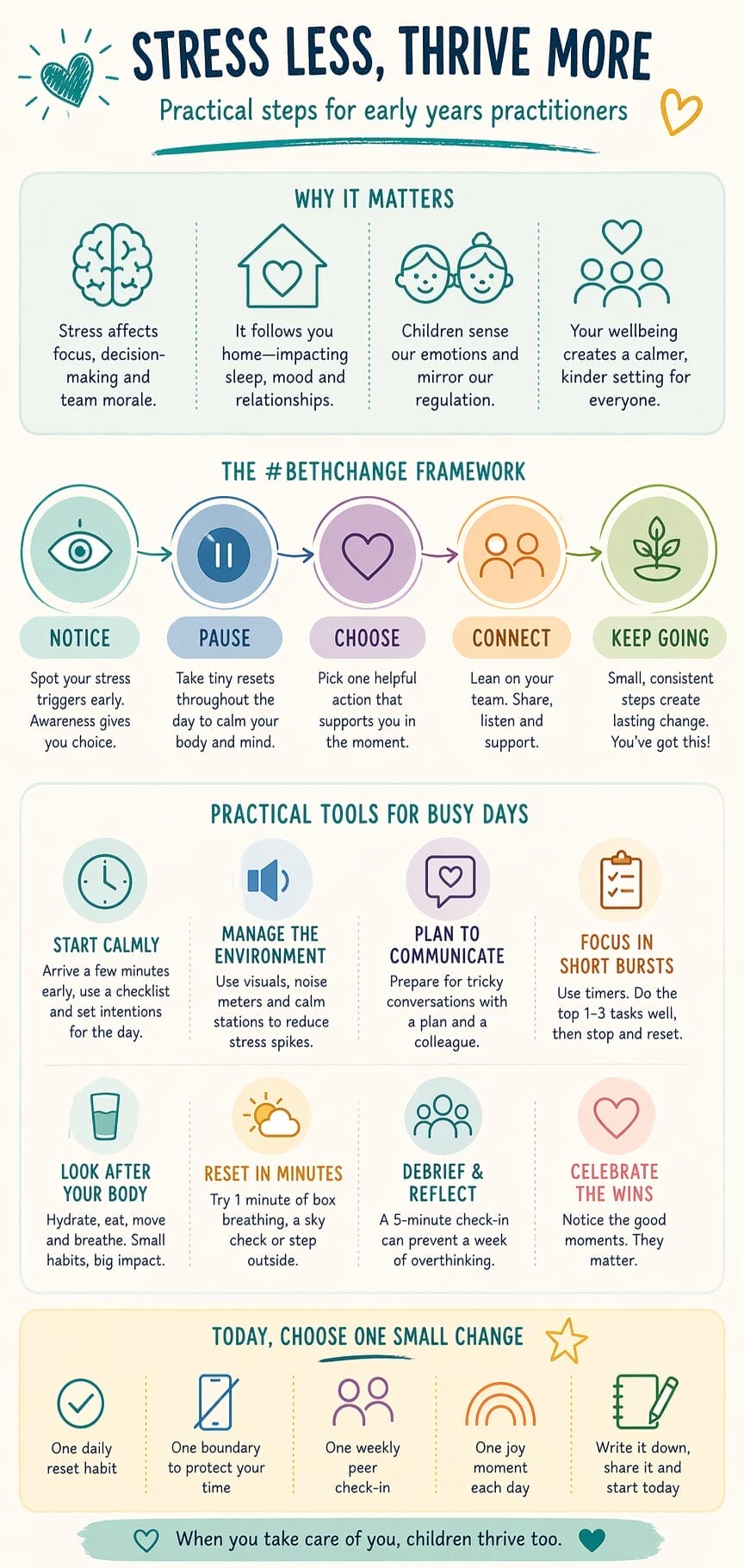
Why Stress Awareness Month And #BeTheChange Matter In Early Years
Stress does not live in a separate box. It travels with you. It shapes thoughts, reactions, and how you show up for children, families, and colleagues. In early years spaces, where patience, attentiveness, and warmth guide every moment, stress can change the tone of the room.
How Stress Shows Up At Work
Ongoing stress can make it harder to focus and decide what to do next. You might find yourself second-guessing choices or missing small details. Team morale can dip when everyone is running on fumes. That can increase absence, strain communication, and chip away at cohesion until the whole culture feels wobbly.
How Stress Follows You Home
After a long day, your body still thinks it is on duty. Sleep is light, you replay conversations, and switching off feels impossible. Over time this is draining for you and your relationships. Naming it is the first step that opens the door to change.
The Ripple Effect On Children
Children are keen observers. They match our tone, speed, and energy like little mirrors. When adults feel tense, children may become clingy, more reactive, or struggle to regulate their own feelings. When adults feel grounded, children borrow that calm and learn to steady themselves.
From Coping To Change: #BeTheChange In Action

Change starts small. Think toothbrush habits, not a spa day once a term. Here are simple, doable steps you can take during Stress Awareness Month and beyond.
Recognise Your Triggers
Notice when your shoulders rise or your breath gets shallow. Is it late handovers, noise levels, or last-minute rota changes? Awareness helps you respond instead of react. It is like spotting a puddle before you step in it.
Set Boundaries That Stick
Protect recovery time where you can. Take real breaks without your lanyard. Agree team norms for messaging outside hours. Use a brief end-of-day checklist so work leaves your head before you leave the building.
Pause, Reset, And Regulate
Short resets can shift your nervous system. Try box breathing for one minute. Step outside for three slow breaths and a sky check. Drink water while standing tall. These tiny acts add up more than you think.
Connect And Share Support
Talk with a colleague or supervisor when something feels heavy. A five-minute debrief can prevent a week of overthinking. Supportive teams normalise asking for help and offering it back. No one wins at a silent struggle.
Practical Tools For Busy Early Years Settings
Think of stress management like tidying a playroom. You need quick wins in the moment and smart systems that stop mess building up again. The ideas below blend both.
Stress Patterns And Helpful Swaps

| Situation In The Setting | Common Response | Practical Swap |
| Firefighting tasks during the morning rush | Skip breakfast, hold your breath, sprint between rooms | Arrive 5 minutes early for a calm start routine and assign a rotating morning lead |
| Noise peaks in free play | Raise your voice and feel tension building | Use a visual noise meter and switch to a quieter station like playdough or books |
| Difficult conversation with a parent | Worry all day and tackle it on the fly | Plan a short meeting, use a script template, and have a colleague sit in |
| After an incident or escalation | Push through and store it up | Take a 2-minute reset, log the event, and agree one small next step |
Small, Doable Actions For Stress Awareness Month
- Choose one daily reset habit like one-minute box breathing after snack time.
- Set one boundary, such as no non-urgent messages after 6 pm.
- Pick one weekly peer check-in for five minutes of honest chat.
- Use a simple visual for noise or transitions to lower spikes.
- Try a 10-second name-and-notice with each key child to build connection.
- Schedule one joy moment in your day like a silly song at tidy-up.
Real-World Scenarios And How To Respond
Short Staffing On A Rainy Monday
You feel the pressure rise as coats drip in the hallway. Instead of holding everything, call a two-minute huddle. Agree a pared-back plan, close one area, and pick a calm lead for transitions. Think of it like reducing the number of balls you juggle so none end up on the floor.
A Child Melts Down At Collection Time
Your heart rate jumps. Instead of speeding up, slow down. Lower your voice, go to the child’s eye level, and offer a simple choice. Ask a colleague to manage the door while you help the child co-regulate. You keep safety and connection, and the line keeps moving.
Paperwork Pile After Lunch
The pile whispers your name. Set a 15-minute timer and complete the top two items only. Then stop. Doing a little with focus beats doing everything while frazzled. Like tidying one shelf instead of the whole cupboard.
Understanding The Science Without The Jargon
Stress is your body’s alarm. It is useful for short bursts, like catching a cup before it tips. When the alarm stays on, your thinking brain gets tired and your survival brain takes over. That is why tiny resets help. A few calm breaths tell your body it is safe, and your thinking brain returns to the driver’s seat.
Children borrow adult regulation. This is called co-regulation, but you can think of it as sharing umbrellas in the rain. When you steady yourself, you have a spare umbrella to share. When you are soaked and shivery, it is harder to help anyone else.
Building A Supportive Culture Year-Round
Culture is the air we breathe at work. You shape it every day with tone, pace, and small choices. During Stress Awareness Month, try one action that makes the air a little fresher for everyone.
Leader Moves That Make A Difference
Schedule short, regular check-ins that focus on workload, not only performance. Share a simple escalation plan so no one feels alone with a crisis. Protect breaks and model leaving on time when you can. Celebrate tiny wins at the end of the day so effort is seen.
Team Habits That Stick
Pick shared language for stress, like a colour code, so you can signal when you need a hand. Keep scripts for common tough moments. Set a rota for reset cover so a colleague can step in for two minutes if needed. Keep a quiet corner stocked with soft lights and sensory tools for children and staff alike.
Support Is Strength
You do not have to carry stress alone. Workplace wellbeing offers, professional networks, and external services can help. If you want general guidance on work-related stress duties, the Health and Safety Executive has useful resources at HSE stress guidance. Reaching out is not a weakness. It is how we look after each other.
Make Stress Awareness Month Count
Pick one change that fits your day. Maybe it is a two-minute breath break, a boundary around messages, or a weekly debrief with a teammate. Small, consistent choices shape how you feel at work and at home. In early years settings, where relationships are everything, these shifts ripple out to children and families.
By taking care of your own mental wellbeing, you create a calmer, more nurturing space where children feel safe to explore, learn, and grow. This Stress Awareness Month, take a moment to reflect, reset, and remember that change begins with you. If you try one idea from this article, write it down, share it with a colleague, and start today. Your future self, and your setting, will thank you.